What is an advergame? A practical guide for marketers
What an advergame is, the main formats, historical examples and how to design one that works: a practical guide for marketing and brand managers.
In short: an advergame is a video game built for a brand. The company’s products, mascot and values become characters, worlds and challenges. It is used to win attention, engagement and contacts, and today it is almost always played on a phone through a link or QR code, with nothing to download.
What is an advergame?
The word combines advertising and game. The difference from a banner or a video ad is simple: in an advergame the brand is not a message to watch, it is the world you play in.
A good advergame has three traits:
- The brand is the game. The mascot is the character, the product is the object to collect, the venue is the level to explore.
- It has a business goal. Awareness, lead generation, sales, event participation: the goal is set before the game is designed.
- It is easy to reach. A link, a QR code on the pack or at the stand, a game that starts in seconds.
Not new: from 1983 to today
Brands have used video games since home consoles existed. In 1983 a soft-drink mascot, Kool-Aid Man, became an Atari 2600 game. In 1996 Chex Quest shipped on CD-ROM inside cereal boxes. In 1999 Pepsiman brought Pepsi’s mascot to PlayStation.
What has changed is the cost. For decades a custom game meant months of work and a big-brand budget. Today, with AI-assisted development workflows, time and cost have dropped enough to make advergames accessible to small and mid-sized companies too. We explain why in our business case.
Why a game works where an ad struggles
An ad asks for attention; a game earns it, because people choose to play. The reasons are practical:
- Voluntary attention. Players stay with the brand for minutes, and sometimes hours across sessions, instead of the few seconds of an ad.
- Participation. Leaderboards, challenges between friends and prizes turn audiences into players who come back and share.
- Active recall. People remember what they did better than what they only saw: in a game the product is used, not just watched.
- First-party data. Players who sign up for a leaderboard or a prize leave their contact details, with consent.
The most common formats
There is no single kind of advergame. The formats we propose most often are:
- Mini-games for events and trade fairs: short, replayable games, ideal for a stand or a social campaign.
- Mascot games linked to the product: a QR code on the pack takes people straight into the game.
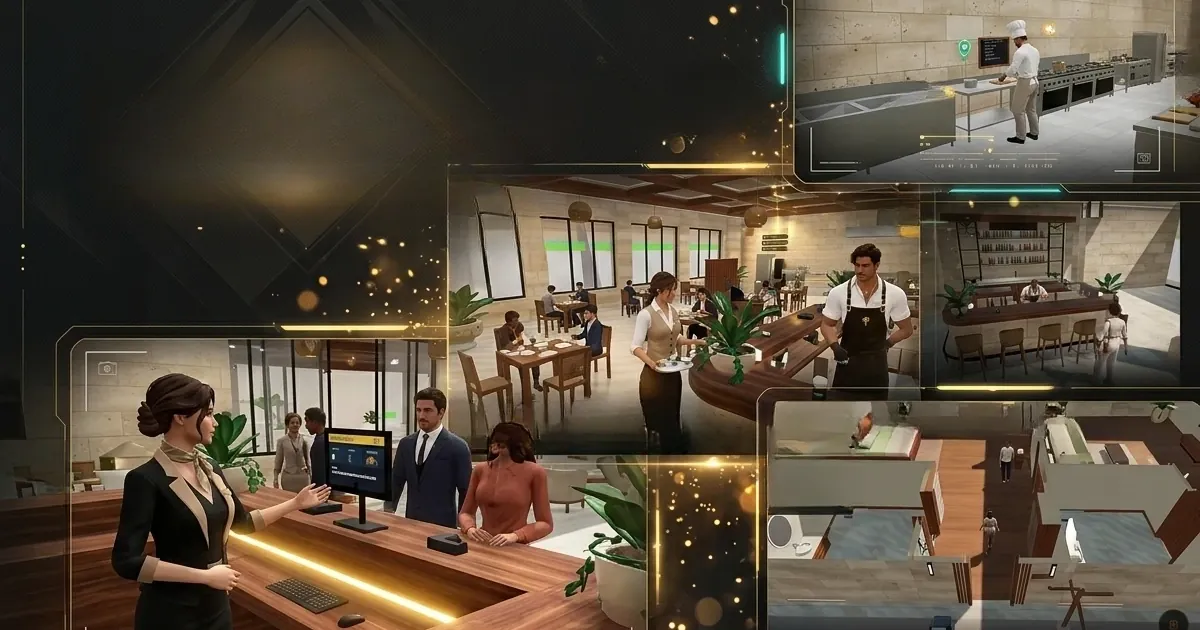
- Explorable 3D worlds: hotels, resorts, museums or destinations rebuilt as places to visit from a phone.
- Contests and leaderboards: prizes and challenges that collect contacts in line with GDPR.
- Story games: they tell the story of a place, a collection or a product.
How to design an advergame that works
A fun game is not enough: it has to be useful to the business. Our method has five steps.
- A measurable goal. For example, 2,000 qualified contacts during a trade fair, or a longer average time on site.
- Audience and context. Who plays, where and for how long: in a queue at a stand people play for two minutes, on the sofa for twenty.
- A mechanic tied to the brand. The rules should make players “use” the product or tell its value.
- Zero friction. No download, fast loading, play straight from the browser.
- Measurement from day one. Players, play time, repeat plays, shares and contacts.
First of all we build a playable prototype to test and improve together. It is the fastest way to find out whether the idea works.
How much does it cost, and how long does it take?
It depends on the format. A simple mini-game for an event can be ready in a few days; a game with several levels, characters or a 3D world takes a few weeks. Cost follows the same logic: a mini-game costs far less than an explorable world. After a first conversation we always prepare a clear quote.
A concrete example
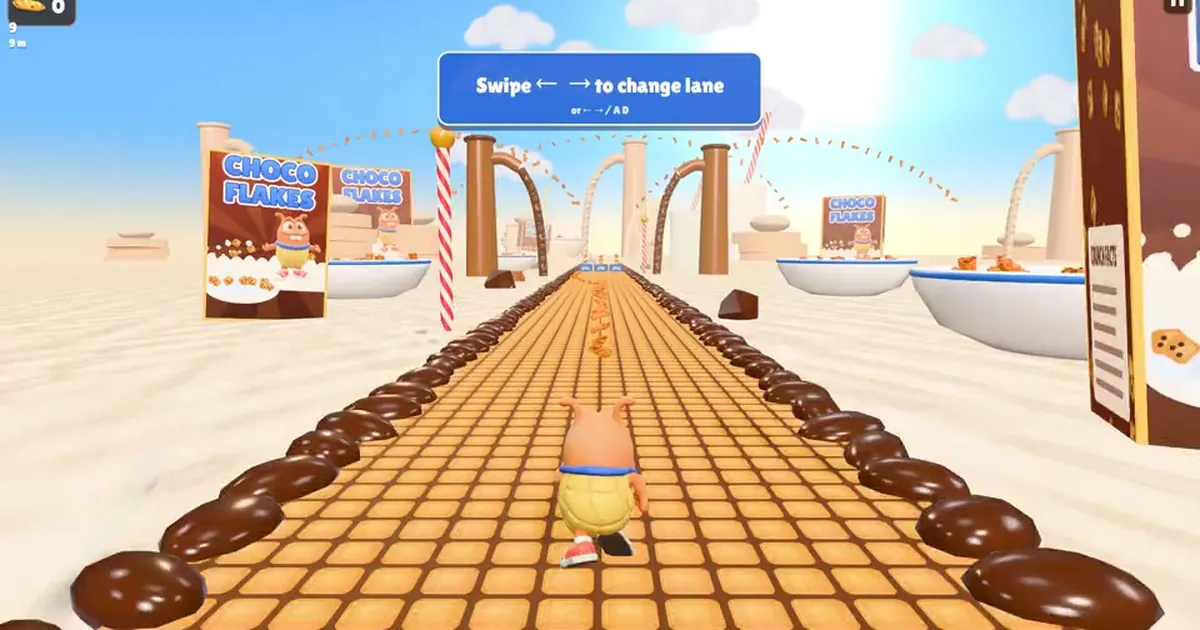
Choco Flakes Run! is a demonstration prototype built by our creative director: an endless runner starring a cereal mascot, through rivers of milk and chocolate waterfalls, reached through a QR code on the pack. It was not commissioned by the brand, but it shows the format well. You can play it in our portfolio, alongside other playable projects.
Frequently asked questions
Are advergames and gamification the same thing?
No. An advergame is a complete game built around a brand. Gamification applies individual game mechanics, such as points, levels or leaderboards, to something that is not a game: a loyalty scheme, a process, a training path.
Do players need an app?
No. Modern advergames run in the phone’s browser through a link or QR code. A native app only makes sense for projects meant to stay on the device for a long time.
Do advergames work in B2B?
Yes, especially at trade fairs and events: a game at the stand draws visitors, starts conversations and collects quality contacts. It also works to explain a complex product in a simple way.
How do you measure an advergame’s success?
With the indicators set at the start: number of players, play time, repeat plays, shares and contacts collected. The game records this data and reports it clearly.
Wondering whether an advergame suits your brand? See how we work on advergames or write to [email protected].

Play2Business designs and builds custom advergames, serious games and interactive experiences for companies and institutions.
About →