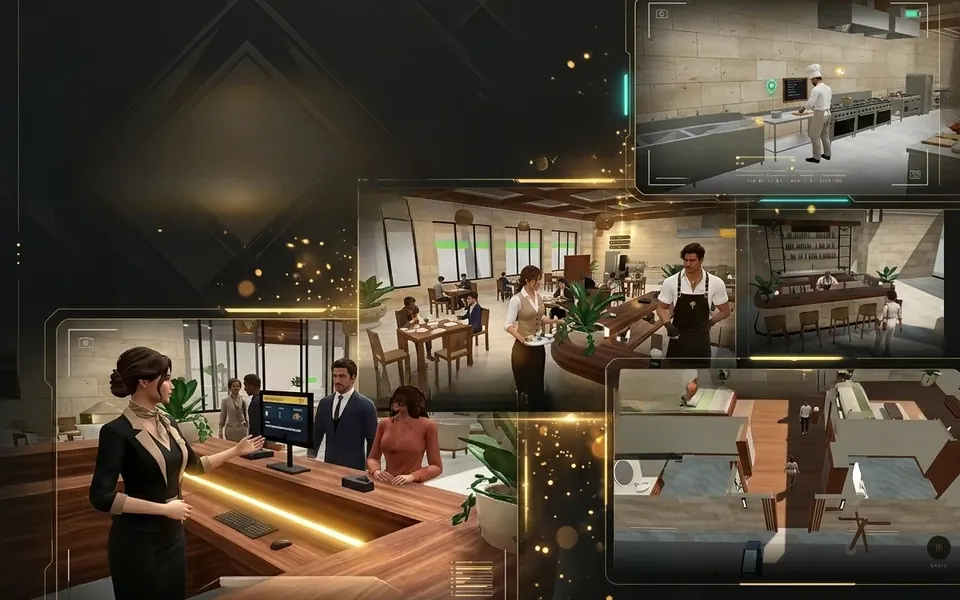
Grand Hotel Simulator
Designed for students who may know neither the job nor video games. They join from a QR code and practise six roles with real procedures: reception, restaurant, kitchen, bar, housekeeping and management.
Interactive simulations and training games that turn procedures, knowledge and skills into hands-on experiences.
Slides, videos and manuals are passive. Information is hard to remember, and even harder to apply on the job.
Games where people face real situations, make decisions, see the consequences and improve, in a safe environment where mistakes teach.
Turn procedures and product knowledge into scenarios people can play through.
Help new people learn the company, its values and its ways of working.
Simulate risky situations and the right responses, without real-world risk.
Rehearse conversations, objections and service moments with instant feedback.
Teamwork, priorities and decision-making, practised through play.
Games for schools and universities that teach and check knowledge at the same time.
Challenges, points and progress applied to existing business processes.
Built with your experts and your actual procedures.
Every choice shows its consequence, so people understand why.
Levels and rankings motivate repetition and show who needs support.
Phone, tablet or computer, from a QR code, in multiple languages.
Designed for students who may know neither the job nor video games. They join from a QR code and practise six roles with real procedures: reception, restaurant, kitchen, bar, housekeeping and management.
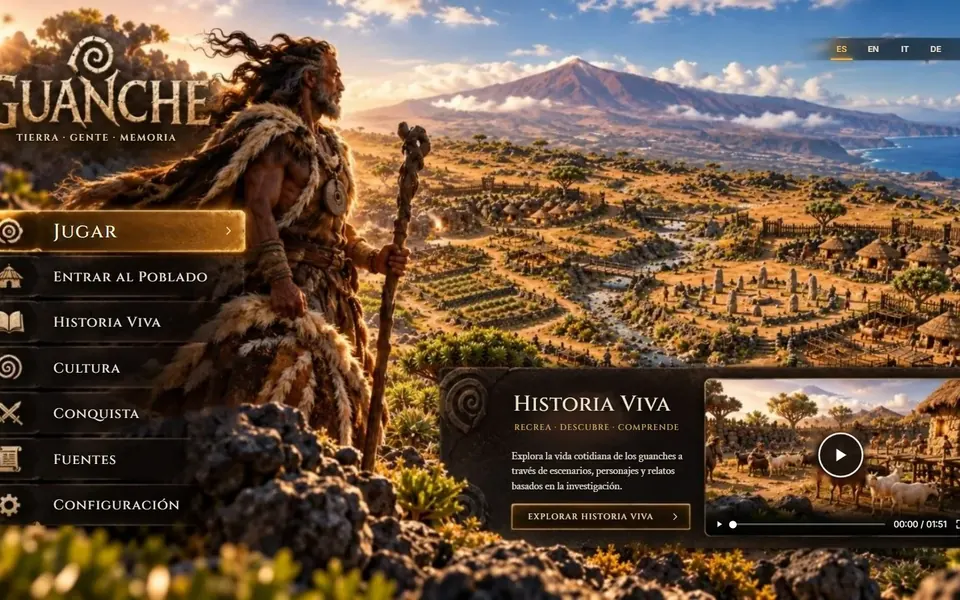
A cultural project that tells the conquest of Tenerife and Gran Canaria as an action game, with a “living history” mode to understand how people lived. Five languages, no download.
© Alexandro Buggero. All rights reserved. Projects by the creative director of Play2Business. See the full portfolio ↗
No, it complements it. It is especially useful for practising procedures and decisions, and it works alongside classroom sessions, e-learning and on-the-job coaching.
Yes: scores, recurring mistakes, times and progress, also by role or location. That data shows where people need more support.
Yes, if the game is designed for them. Grand Hotel Simulator, for instance, is built for students who may know neither the job nor video games: they join from a QR code in seconds.
Share the skill, the procedure or the message. We’ll design a game around it and show you a first playable version early.
[email protected] Request a proposal